


SDG 10 : Reduced Inequalities
Assumption University recognises that economic and social inequality, together with unequal access to education, remain significant barriers to sustainable development. In alignment with SDG 10 (Reduced Inequalities), the University regards equitable access to quality education as a foundation for social mobility and for the creation of a more inclusive society.
This commitment is grounded in the educational philosophy of the St. Gabriel’s Foundation of Thailand, which upholds human dignity and the equal worth of every person. Guided by this philosophy, the University strives to provide an open and fair learning environment, free from discrimination on the grounds of race, religion, gender, economic status or disability. As an international institution with students and staff from diverse countries and cultures, the University places particular importance on embracing diversity as a strength of its academic community.
To translate these principles into practice, the University promotes equality through a range of institutional measures. These include admission pathways that open opportunities to disadvantaged groups; scholarships and financial support for students in need; facilities and services for persons with disabilities; and policies and mechanisms to prevent discrimination and harassment in all forms. Through these efforts, the University seeks to nurture graduates who are global citizens, who respect differences, demonstrate empathy and contribute to building a fair society that leaves no one behind.
10.2 First-generation students
10.2.1 Proportion of first-generation students
|
Proportion of first-generation students |
30.24% |
| – Number of students starting a degree |
1,759 |
| – Number of first-generation students starting a degree |
532 |
10.3 International students from developing countries
10.3.1 Proportion of international students from developing countries
|
Proportion of international students from developing countries |
50.05% |
| – Number of students |
9,180 |
| – Number of international students from developing countries |
4,595 |
10.4 Proportion of students with disabilities
10.4.1 Proportion of students with disabilities
|
Proportion of students with disabilities |
0.07% |
| – Number of students |
9,180 |
| – Number of students with disabilities |
6 |
10.5 Proportion of employees with disabilities
10.5.1 Proportion of employees with disabilities
|
Proportion of employees with disabilities |
0.55% |
| – Number of employees |
914 |
| – Number of employees with disabilities |
5 |
10.6 Measures against discrimination
10.6.1 Non-discriminatory admissions policy
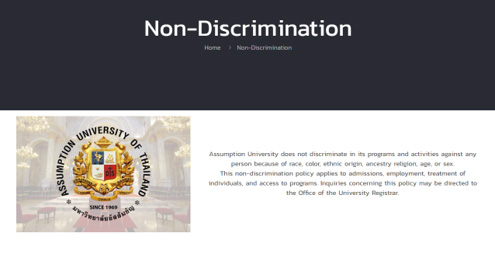
Assumption University maintains a non-discrimination policy in its admissions. The University does not discriminate against any applicant on the basis of race, color, ethnic origin, ancestry, religion, disability, age, or sex. This policy applies to the University’s admissions process to ensure that all applicants are considered equally and fairly.
The non-discrimination announcement is published on the Assumption University Admissions Center website:
- URL: https://admissions.au.edu/?page_id=6865
- Published: July 5, 2021
Last modified: November 14, 2024
Loading Viewer...
Reference : https://sustainability.au.edu/wp-content/uploads/2025/04/33_anti-discrimination.pdf
10.6.2 Access to university track underrepresented groups applications
Assumption University recognizes that higher education is a key mechanism for reducing inequality of opportunity. The University therefore offers a diverse and inclusive system of scholarships and financial support for learners from different backgrounds and with different potential. Eligibility criteria, application procedures and scholarship conditions are published transparently on the Admissions Center website, so that applicants can access the information on their own.
AU’s support falls into five categories. The first is the King Rama X Honor Scholarship, which supports academically capable students from low-income families. It began in academic year 1999, when Assumption University, under then-Rector Bro. Dr. Prathip Martin Komolmas, offered it to His Majesty King Bhumibol Adulyadej (Rama IX) on his 72nd birthday. Each year it funds nine students from Wang Klai Kangwon School under Royal Patronage (children of royal attendants, youth under royal patronage, or others designated by royal wish) to study for a bachelor’s degree at AU. The University covers tuition and accommodation for the full study period, provided students meet the Registrar’s Office academic requirements and maintain good conduct. Known as the 72nd Birthday Celebration (Nawaminthra Maharat) Scholarship from 1999 to 2023, it was renamed the King Rama X Honor Scholarship in 2024.
The second category is merit scholarships, which recognize ability and potential. These include the AU The Creator of Tomorrow Scholarship, offered both for special talent, academic achievement or extracurricular activities and on a competitive examination basis. They also include the Assumptionist Scholarship for students from schools under the St. Gabriel’s Foundation of Thailand who studied continuously from Primary 1 to Secondary 6. The third category is welfare scholarships for the children of University employees at all levels, including support and manual staff, many of whom are on lower incomes. These scholarships help families with limited financial means give their children a university education, so that a parent’s job or income does not limit their child’s opportunities. The fourth is the Athletes Scholarships across several sports, which require a minimum cumulative GPA of only 2.00 to give athletically talented students the opportunity to pursue higher education. Finally, the University supports students who need government financial assistance by providing information on the Student Loan Fund (กยศ.), which helps cover tuition, education-related expenses and living costs during their studies.
Scholarship recipients are not required to repay the scholarship after graduation. The selection process is clear, consisting of portfolio review, knowledge assessment and interviews by a committee. This reflects the University’s commitment to providing educational opportunities fairly, based on ability and determination.
The number of students supported under each category in Academic Year 2025 is shown in the table below.
The number of scholarship students in Academic Years 2025 is shown in the table below.
|
Number of Scholarship Students in Academic Year 2025 |
|||
|
Scholarship |
Number of students | Number of scholarship students |
Proportion (%) |
|
THE HONOR OF KING RAMA 10th |
9,180 | 35 | 0.38 |
|
MERIT SCHOLARSHIPS |
9,180 |
266 | 2.90 |
|
WELFARE |
9,180 |
30 |
0.33 |
|
ATHLETES SCHOLARSHIPS |
9,180 |
36 |
0.39 |
|
STUDENT LOAN FUND (กยศ.) |
9,180 | 198 |
2.16 |
| Total | 9,180 | 565 |
6.15 |
10.6.3 Access to university underrepresented groups recruit
Assumption University runs planned programmes to recruit students and staff from under-represented groups, including students from remote and low-income backgrounds, students from developing countries and ethnic regions, vocational and non-traditional learners, and older workers. The main programmes are:
- Royal scholarship pathway for Wangklaikangwon School: Through The Honor of King Rama X Scholarship, AU recruits graduates of Wangklaikangwon School in Hua Hin, Prachuap Khiri Khan, into its degree programmes. The Office of the Vice President for Student Affairs and the Financial Assistance Division run the scheme. During Academic Year 2025, scholarship holders took part in University life, including serving as liaison officers when AU hosted three events of the 33rd SEA Games in December 2025
References: Honoring Excellence: Orientation for Recipients of The Honor of King Rama X Scholarship Held at AU; AU Dives In: AU Prepares to Host Three SEA Games Sporting Events
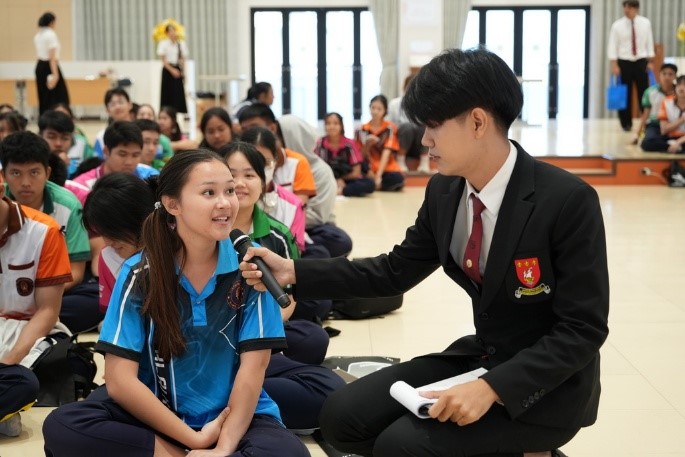
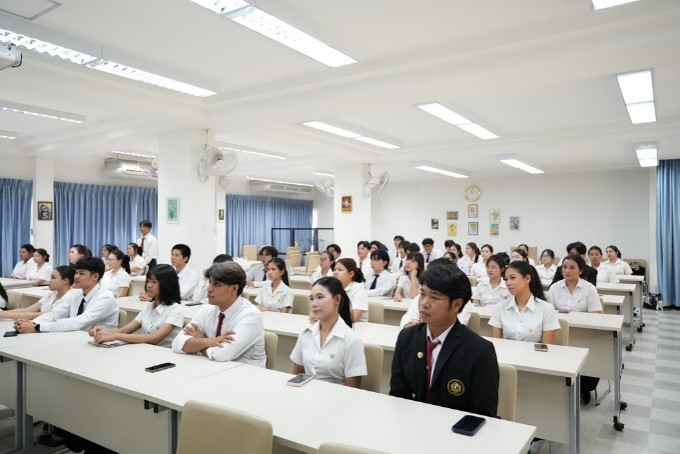
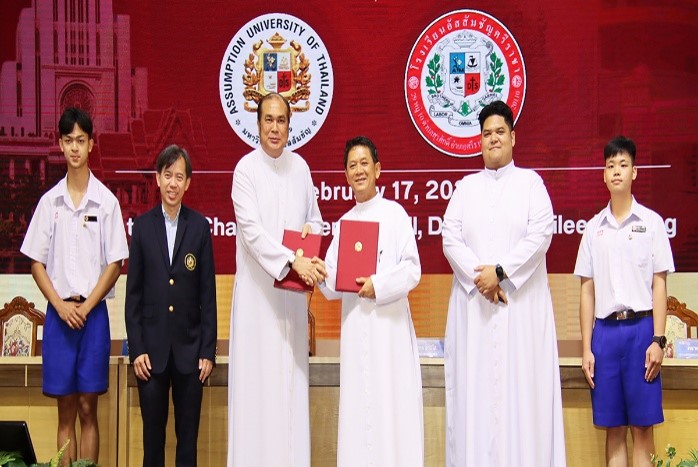
Reserved admission quotas and scholarships for partner schools: Five-year MoUs with Assumption College Samut Prakan (21 January 2025) and Assumption College Sriracha (17 February 2025) give their students reserved admission quotas, scholarships and transferable university credits earned in Grades 10–12, with teacher training and preparatory workshops. AU also signed MoUs on academic collaboration and student advancement with Nawamintharachinuthit Triamudomsuksapattanakarn School (4 June 2025) and on university-level experience and study pathways for upper-secondary students with Saint Louis School Chachoengsao (2 December 2025).
References: Bridging Bright Futures: AU and Nawamintharachinuthit Triamudomsuksapattanakarn School Sign on for Success; A Stronger Future Together as AU and Saint Louis School Sign New Partnership
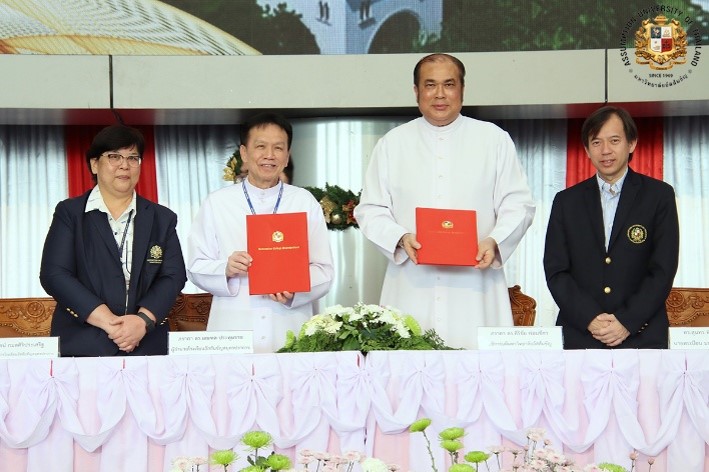
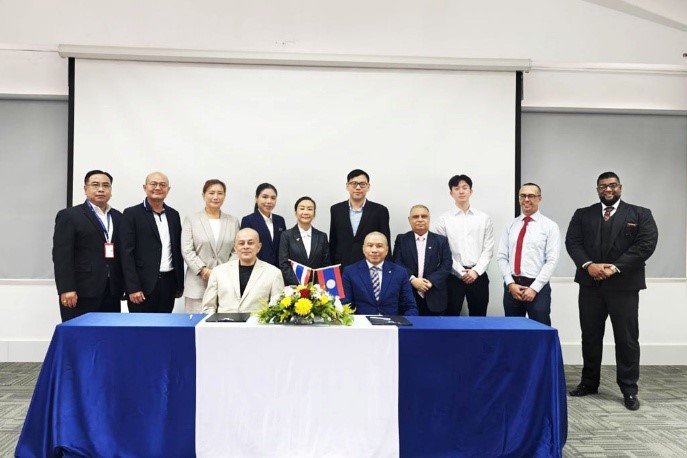
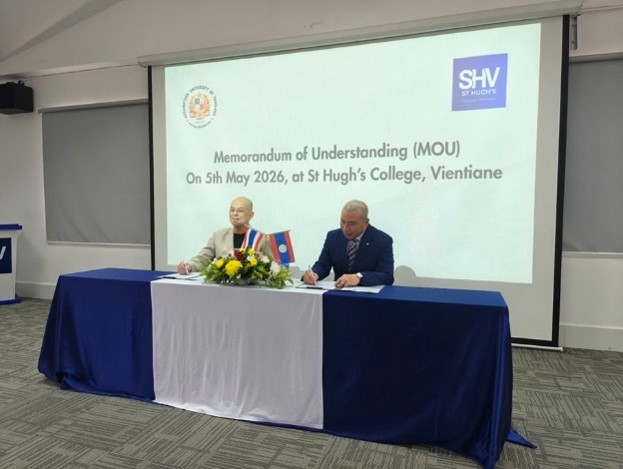
- Students from developing countries and ethnic regions: On 5 May 2026, AU signed MoUs with Panyathip British International School and St. Hugh’s College in Vientiane to open further-study pathways at AU for Laotian and international students
Reference: AU Expands its Collaborations with Laos for the Future of ASEAN Education
- Overseas representatives in developing countries: AU maintains a network of official overseas representatives in 22 countries, most of them developing countries in Asia and Africa, including Myanmar, Cambodia, Vietnam, Nepal, Bhutan, Bangladesh, Sri Lanka, Pakistan, Nigeria, Ghana, Congo, Tanzania, Zimbabwe and Egypt. The representatives give prospective students in these countries a local point of contact for information about studying at AU.
Reference: Overseas Representative, Assumption University
In early 2026, AU announced through the Embassy of Sri Lanka in Bangkok a 100% tuition-fee waiver for Sri Lankan nationals entering Master’s and Ph.D. programmes in the 2026/27 intake. Six agreements with Aba Teachers University, China (25 June 2025), set up joint bachelor–master programmes and a Sino-Thai Research Center for Basic Education of Nationalities, which studies basic education in ethnic regions. Peer support for Myanmar students is described in 10.6.6.
References: Letter of scholarship offer to Sri Lankan nationals (Embassy of Sri Lanka, Bangkok); AU and Aba Teachers University Expand Belt and Road Cooperation with Sino-Thai Research Center
- Vocational learners: On 21 July 2025, AU’s Gabriel Mary Research and Learning Center for NEV Technology signed agreements with Shanghai Nanhu Vocational and Technical College, NS Aviation Academy and Hanyuan Aviation on technician training.
Reference: [AU. MG. SAIC] Innovation Workshop — New Energy Vehicle Campus Interactive Day
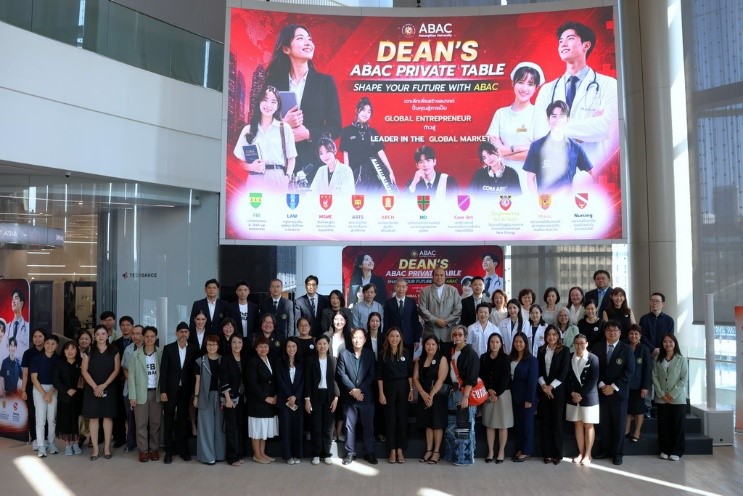
- Financial access: At its ABAC Dean’s Private Table admissions event on 2 May 2026, AU offered eligible applicants scholarships of up to 60,000 baht, in addition to the scholarships and Student Loan Fund described in 10.6.2
References:https://www.au.edu/abac-opens-the-door-to-future-leaders-at-siam-paragon
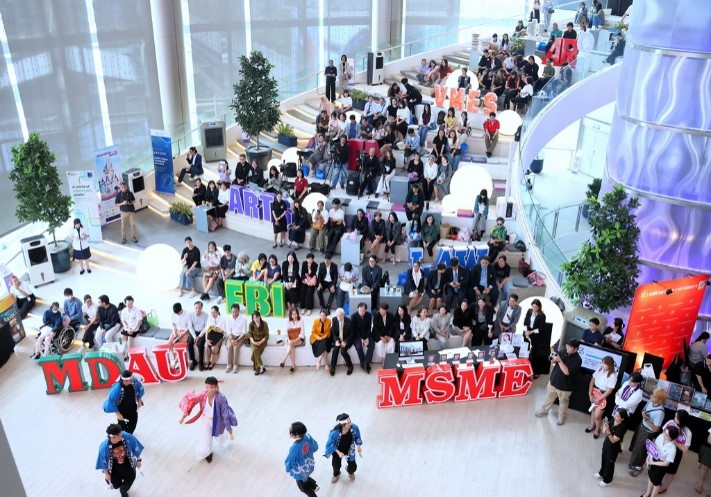
The University also widens access to learning for school students and teachers outside the University through the following programmes:
- Teacher development and language assessment: On 1 August 2025, AU held Chinese language teaching training for teachers and students from 21 schools under the Samut Prakan Primary Educational Service Area Office 2. On 26–27 January 2026, it provided teacher training and online CEFR testing for about 300 secondary students and 12 teachers at Pramandanijjanukroah School, helping the school match English teaching to students’ proficiency levels.
References: Empowering Chinese Language Educators: AU Hosts 2nd Annual Training Workshop for Samut Prakan Schools; IELE Strengthens Collaboration with Pramandanijjanukroah School Through CEFR Training and Assessment
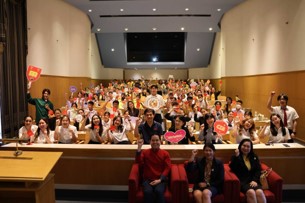
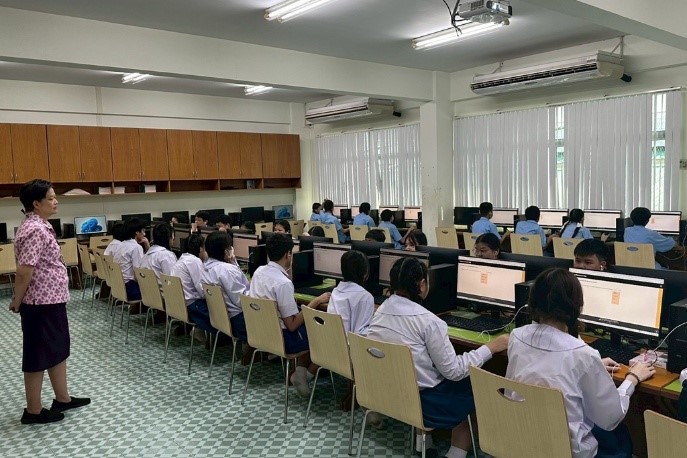
- Camps and workshops for students: An English camp for students of Saint Louis School, Chachoengsao, on 21 November 2025, which also introduced AU’s international learning environment, and a Pitching and Public Speaking workshop for 16 Grade 11 students at Assumption College Thonburi on 3 April 2026.
References: AU English Camp Brings Learning to Life for St. Louis Students; IELE Supports University Readiness Through University-Level Pitching Training at Assumption College Thonburi
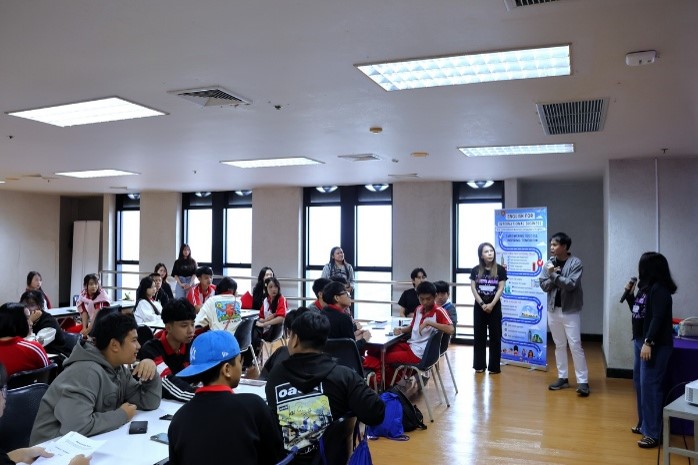
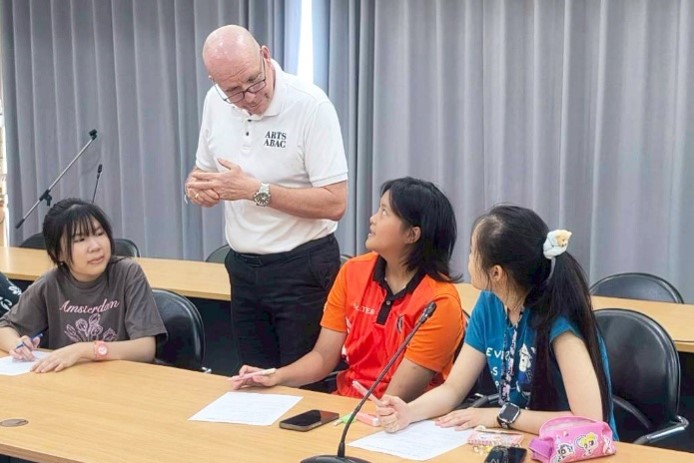
- Areas outside major education centres: On 10–11 January 2026, 19 graduate students from the Graduate School of Human Sciences ran an English and Values Camp at Assumption Technical School Nakhon Phanom, extending learning opportunities to students outside major education centres.
Reference: English & Values Camp, Graduate School of Human Sciences
- Talented young people: The Music Boost Camp, held from 30 July to 3 August 2025 with the Office of Knowledge Management and Development under the Talent Everywhere project, developed musically talented young people from regions across Thailand.
Reference: AU Hits the Right Note with Music Boost Camp
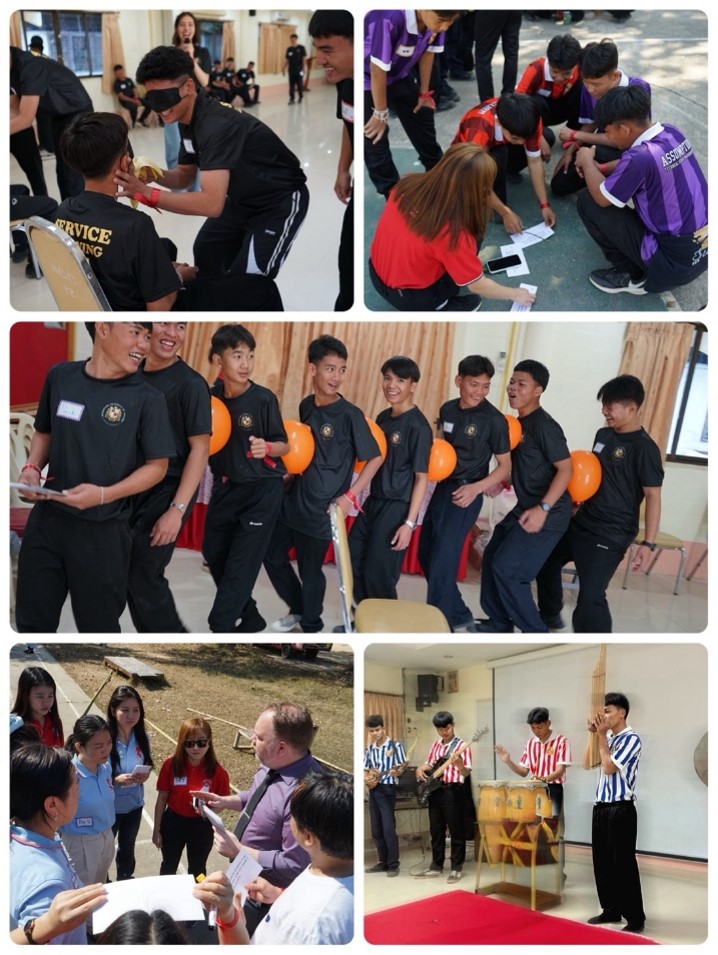
- Scholarship youth from disadvantaged backgrounds: AU partnered with the Ruamchit-Normklao Foundation for Youth under the Royal Patronage, which has awarded more than 35,000 scholarships to students from disadvantaged backgrounds. After a preparation meeting chaired by the AU President on 18 June 2025, AU hosted the Foundation’s 10th Thai Art and Culture Promotion Program on 21–25 October 2025 for scholarship recipients from all 77 provinces. Participants stayed at the Suvarnabhumi Campus, visited cultural and historical sites in and around Bangkok, and took part in learning and reflection activities on teamwork, critical thinking and youth leadership.
References: Celebrating Heritage, Empowering Youth: AU Prepares for the 10th Art and Cultural Excursion with Ruamchit Normklao Foundation; AU Partners with Ruamchit-Normklao Foundation to Champion Thai Cultural Heritage

Assumption University of Thailand (AU) recruits faculty and staff through open, merit-based processes that produce a gender-balanced and internationally diverse workforce. In Academic Year 2025, AU employed 914 full-time faculty and support staff. Women held 275 of 540 full-time faculty posts (50.93%), 214 of 374 support staff posts (57.22%), and 489 of 914 posts overall (53.50%). AU’s faculty includes members from 29 foreign nationalities, working alongside Thai faculty.
These outcomes reflect AU’s commitment to non-discrimination and equal opportunity. University Announcement No. 5/2568, Policy on Driving the Sustainable Development Goals, commits the University to reducing social inequality, including gender inequality, and applies to all staff and students.
Workforce profile, Academic Year 2025
|
Staff group |
Total | Male | Female |
Foreign nationalities |
| Full-time faculty |
540 |
265 (49.07%) | 275 (50.93%) |
29 |
| Support staff |
374 |
160 (42.78%) | 214 (57.22%) |
None (all Thai) |
|
Total |
914 |
425 (46.50%) | 489 (53.50%) |
|
Support staff by unit: 72 in academic schools, 271 in administrative offices, and 31 in management roles (10 directors, 1 deputy director, 3 assistant directors and 17 heads of department). Figures exclude 89 janitorial staff.
Reference: Assumption University, Office of Human Resource Management: Number of Full-time Faculty Members and Staff in Academic Year 2025, by gender and nationality, 30 June 2026
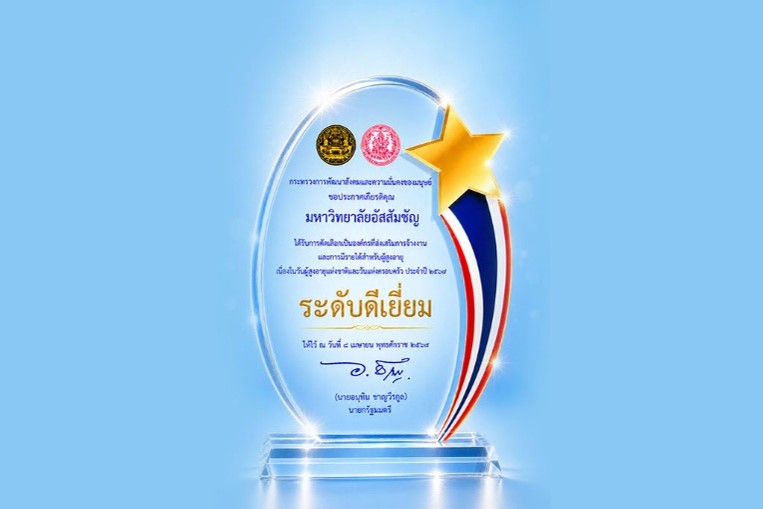
- Staff from under-represented groups: On 8 April 2026, Thailand’s Department of Older Persons gave AU an Excellent Level award for promoting employment and income for older persons. AU’s employment of persons with disabilities is reported in 5 and 10.6.10.
10.6.4 Anti-discrimination policies
Equality and Anti-Discrimination Policy, Assumption University
Based on the Assumption University Regulation on the Code of Ethics for the Chairperson of the University Council, University Council Members, Executives, Personnel, and Students of Assumption University, B.E. 2564 (2021)
Assumption University upholds the principles of good governance, equality, and respect for human dignity. The University is committed to a fair and inclusive working and learning environment, free from discrimination, for all executives, personnel, and students.
1. Equality Policy
- The University Council sets and oversees policy under good governance principles, for the benefit of students, parents, personnel, and the public (Clause 6).
- Executives show care and respect for all personnel equally in their work, morale, and welfare, and adhere to the merit system (Clause 19).
- Executives assign work appropriate to each person’s position (Clause 21) and give personnel a meaningful role in work processes (Clause 22).
- Duties are performed by listening to opinions and information from all sides, and by using sound principles and reasoning in line with what is right and fair (Clauses 10, 18, 20).
- Personnel perform their duties with integrity, equality, and impartiality (Clause 47), and serve everyone who contacts the University with courtesy and goodwill (Clause 50).
2. Anti-Discrimination Policy
- Respect for diversity: Executives, personnel, and students must understand and respect ethnic and cultural differences (Clauses 26, 46, 57).
- No favoritism: No one may use their authority to wrongfully benefit themselves, their associates, or others, whether directly or indirectly (Clauses 11, 27).
- Respect for rights and freedoms: No one may infringe on the academic freedom or academic work of others (Clauses 38, 39). No one may wrongfully use or disclose information about students or other individuals (Clause 53).
- Freedom from harassment: No one may engage in physical or verbal conduct that constitutes or suggests sexual harassment (Clauses 41, 42, 54).
- Living together peacefully: Students must maintain unity, respect the rights of others, live harmoniously with others, and cause no trouble or disturbance to anyone (Clause 57).
3. Oversight and Enforcement
- Responsible body: The University Council appoints a Good Governance and Ethics Committee. Its members include representatives of executives, academic personnel, and academic support personnel. The Committee proposes ethical guidelines and measures and considers and rules on ethical violations (Clauses 63, 65).
- Disciplinary offenses: These are handled under the law or the University’s regulation on personnel administration (Clause 66).
- Non-disciplinary violations: These are handled by a warning, an order to make corrections within a set period, or a written probation. The Human Resources Management Office is then notified so the action is recorded in the person’s file (Clause 66).
Loading Viewer...
4. Policy in Practice: Gender Identity and Expression
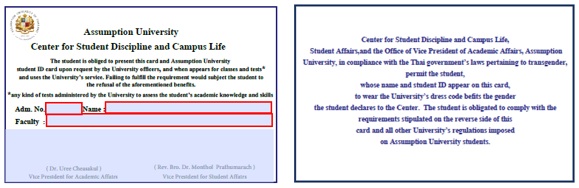
The University applies its commitment to non-discrimination to gender identity and expression. The Center for Student Discipline and Campus Life (Student Affairs), together with the Office of the Vice President for Academic Affairs, runs an application process that allows transgender and gender-diverse students to wear the University dress code that matches the gender they declare, in line with Thai government regulations on transgender students. Applicants submit supporting documents for the University’s consideration. Approved students receive a Gender Expression Authorization Card, signed by the Vice President for Academic Affairs and the Vice President for Student Affairs, which they show to faculty or staff when verification is needed. The authorization covers attending classes, sitting examinations and taking part in University activities. In 2025, 44 students applied.
Evidence: Gender Expression Authorization Card (front and back), Center for Student Discipline and Campus Life, Student Affairs
References: Sustainability Committee, Assumption University; Sustainable Development Policy (University Announcement No. 5/2568)
10.6.5 University diversity officer
University Diversity Officer
Assumption University’s equivalent of a diversity and equality committee is the Good Governance and Ethics Committee of Assumption University. The University Council, the University’s governing body, appointed this Committee to advise on, oversee and enforce the University’s ethical standards, which include equality, non-discrimination, respect for diversity and protection from sexual harassment.
1. Appointment by the Governing Body
The Committee was appointed by University Council Order No. 2/2564 (2021), dated 20 May 2021, and has been in effect since 1 June 2021. The University Council approved the appointment at its 4th meeting of Academic Year 2020, held on 20 May 2021. The Order was signed by the Chairperson of the University Council.
The appointment implements two legal requirements:
- Section 21, paragraph 2, of the Higher Education Act B.E. 2562 (2019)
- Clause 63 of the Assumption University Regulation on the Code of Ethics, B.E. 2564 (2021), which covers the Chairperson of the University Council, Council members, executives, personnel and students
2. Composition
The Committee represents all main groups in the University community:
|
Position |
Role on the Committee |
| Qualified member of the University Council |
Chairperson |
| Vice President for Research and Academic Services (assigned by the President) |
Member |
| Representative of University executives |
Member |
| Representative of academic personnel |
Member |
| Representative of academic support personnel |
Member |
| Director of the Human Resources Management Office |
Member and Secretary |
| Staff member of the Human Resources Management Office |
Assistant Secretary |
3. Mandate
Under Clause 65 of the Code of Ethics, the Committee has the following duties:
- Advise the University Council on ethical guidelines and measures
- Recommend improvements to the Code of Ethics
- Consider and rule on ethical violations
- Appoint working groups or subcommittees as needed
- Carry out other duties assigned by the University Council
The Code of Ethics that the Committee oversees includes these standards on diversity, equity, inclusion and human rights:
- Equal treatment: Executives must treat all personnel equally in their work, morale and welfare, and uphold the merit system (Clause 19). Personnel must perform their duties with equality and without bias (Clause 47).
- Respect for diversity: Executives, personnel and students must understand and respect ethnic and cultural differences (Clauses 26, 46, 57).
- Respect for the rights of others: Students must respect the rights of others and live harmoniously with them (Clause 57). Personnel must not infringe on the academic freedom or work of others (Clause 39).
- Freedom from sexual harassment: Physical and verbal sexual harassment by personnel is prohibited (Clauses 41, 42, 54).
The Committee enforces these standards through warnings, orders to make corrections, written probation, or disciplinary action under the University’s personnel regulations (Clause 66).
4. Link to the University’s Sustainability Policy
The Committee’s work supports the University Policy on Advancing the Sustainable Development Goals (University Announcement No. 5/2568, dated 1 April 2025), issued by the President. This policy commits the University to:
- Reducing social inequality and promoting health, education and gender equality (social dimension)
- Promoting good governance, transparency and the participation of all stakeholders, developing a safe and fair environment, and promoting peace, human rights and social justice (peace and institutions dimension)
- Developing training courses and activities that support sustainability, and promoting lifelong learning and education for all ages (education for sustainable development)
The policy states that the University aims to help students of all ages gain the knowledge, skills, values and capacity to support fair and equitable economic and social development.
Loading Viewer...
Loading Viewer...
Loading Viewer...
5. Training and Awareness Programmes
The University puts these policies into practice through required training, workshops and dialogue for students and staff.
5.1 For Students
Professional Ethics Seminars (BG14031–BG14038), a required course for all undergraduates
Every undergraduate student must take one Professional Ethics Seminar each semester for eight semesters. Students attend two classes per semester, and they cannot graduate without passing all eight courses with an “S” grade. One of the programme’s objectives is for students “to live peacefully and harmoniously with other people.” The four-year curriculum builds skills tied to diversity, equity, inclusion and human rights:
- Year 1 (Knowing): respecting other people’s rights, critical thinking and decision making
- Year 2 (Doing): empathy, accepting differences, concern for others, communication, cooperation and conflict resolution
- Year 3 (Being): leadership, community service volunteering, sharing and teamwork
- Year 4 (Living): responsible citizenship, personal safety, self-esteem, managing feelings and stress management
The programme is run by the Center for Professional Ethics and Leadership (contact: auethics@au.edu).
Freshmen Orientation
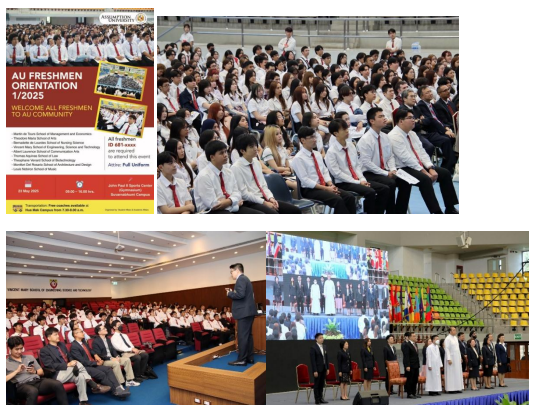
The orientation took place at the John Paul II Sports Center on Suvarnabhumi Campus. It introduces new students to the University’s values and to the Student Rules and Regulations, including the expectation that students respect other people’s rights. It also prepares them for the Professional Ethics Seminars, which they must pass to graduate.
5.2 For Students, Staff and the University Community
CU-KU International Symposium in Education 2025: “Inclusive Society” (8 July 2025)
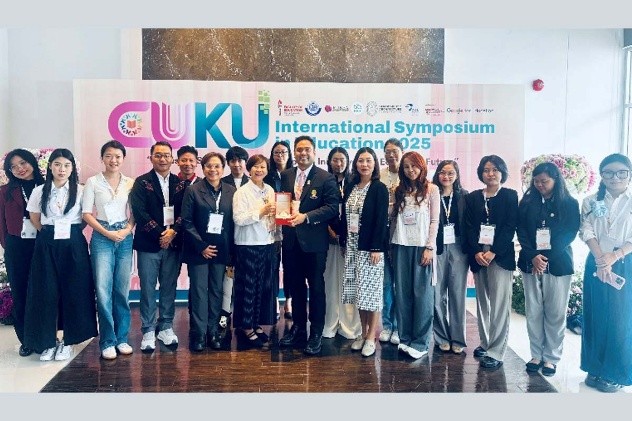
Students of the Graduate School of Human Sciences from the Educational Administration and Leadership, Curriculum and Instruction, and English Language Teaching programmes took part in the CU-KU International Symposium in Education 2025 at Chulalongkorn University, under the theme “Inclusive Society: Innovating for an Inclusive and Equitable Future.” Accompanied by Asst. Prof. Dr. Poonpilas Asavisanu and Dr. Nathara Mhunpiew, they discussed inclusive policies, equal opportunities and equitable learning environments with educators and scholars from across the region, preparing them as future educators and leaders to promote inclusion (SDG 4, SDG 10).
Reference: AU Education Students Join the International Symposium on Equity and Inclusion at CU-KU Symposium
“Thai Etiquette and Social Etiquette towards International Standards” workshop The Department of Cultural Promotion’s Institute of Cultural Studies organized this workshop with Assumption University at the Suvarnabhumi Campus. It was attended by 100 Thai and international students and 10 faculty members, with English and Chinese interpretation so that all participants could take part. The workshop helped participants build the cultural awareness and mutual understanding they need to communicate respectfully across languages, backgrounds and borders.
Reference: Good Manners Go Global at AU Thai Etiquette Workshop
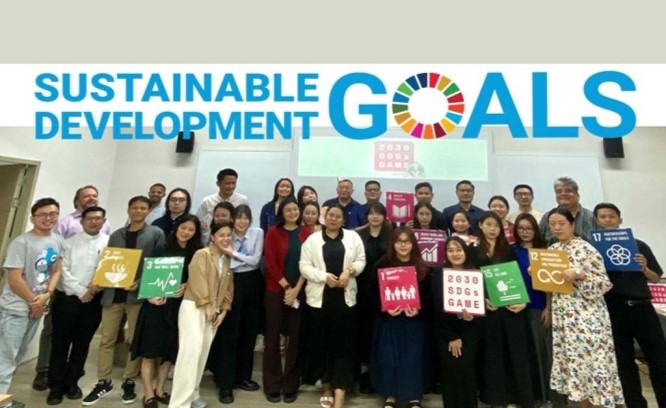
The 2030 SDGs Game workshop On 9 December 2025, the AU Library ran the 2030 SDGs Game, a simulation of the United Nations Sustainable Development Goals, for 30 graduate students of the Graduate School of Human Sciences. Students explored sustainable development through strategy, negotiation and reflection. The session was rated 4.76 out of 5, and all participants said they wanted to learn more about the SDGs.
Reference: Inspired Learning in Action: Human Sciences Students Dive into the 2030 SDGs Game
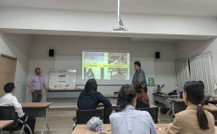
Orientation Day for New Staff Members All new staff take part in an orientation based on the University’s core values of excellence, service and faith. University leaders lead sessions on organizational practice and professional conduct. The sessions stress serving with commitment, compassion and respect, and build cultural understanding among colleagues.
Reference: Welcoming New Faces to the AU Family: Orientation Day for New Staff Members
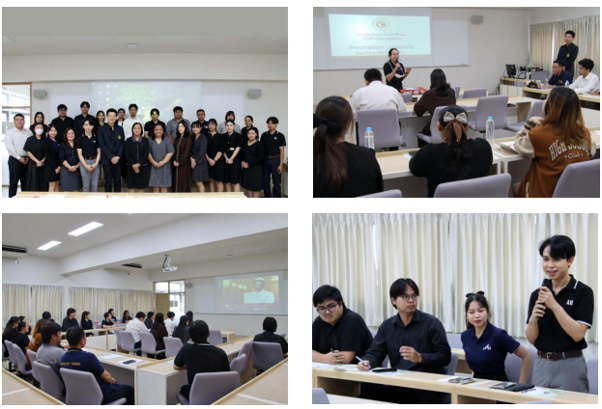
Personal Data Protection Act (PDPA) workshop
On 19 February 2026, the University held “PDPA for AU Workplace: From Compliance to Practice” at the Suvarnabhumi Campus. Led by AU’s Data Protection Officer team and legal specialists, the workshop trained about 100 administrators, faculty members and staff in practical tools and procedures, including records of processing activities, privacy notices, consent forms, data processing agreements, data security measures, incident response and data subject rights. Students of LLB 4804 Law of Personal Data Protection supported the workshop as assistants and presenters. The training supports the Code of Ethics rule that personnel must not wrongfully use or disclose information about students or other people (Clause 53).
Reference: Data Protection in Practice: AU Strengthens PDPA Readiness Across Campus
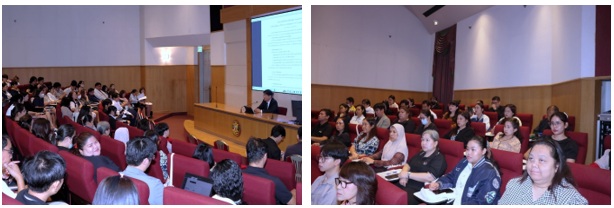
10.6.6 Support for underrepresented groups
Assumption University runs mentoring, counselling and peer support programmes for four underrepresented groups: international students, students and staff with disabilities, people of diverse genders and sexual orientations, and support staff in lower-paid roles. This commitment comes from the University Policy on Advancing the Sustainable Development Goals (University Announcement No. 5/2568), which pledges to reduce social inequality.
At a Glance
|
Group |
Mentoring | Counselling |
Peer support |
| International students | Senior-to-freshman guidance (AUMSC) | Counselling in Thai and English; mental health screening of 385 international students (AY2025) | AUISC and AUMSC student communities |
| Students and staff with disabilities | Mentorship Program for students; workplace mentorship for staff; Individualized Support Plans | Psychological, social and career counselling for students; health and mental health counselling for staff | Inclusive social activities with other students |
| Gender and sexual diversity | — | Confidential sexual and reproductive health counselling | LGBTQ+ interfaith panel; student-led seminar on gender equality in nursing; AU Pride 2025 (AP Club) |
| Support staff in lower-paid roles | Arts Speak Up: workplace English mentoring for housekeeping and security staff by student volunteers | — | — |
1. International Students
Counselling in Thai and English
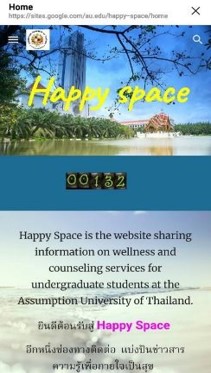
The Center for Career Development and Counseling (CCDC) offers mental health counselling in both Thai and English, so international students can get help in a language they understand. Services include individual counselling, personality and psychological testing, and referrals to hospitals. In Academic Year 2025, the CCDC handled 72 mental health cases and resolved 67; stress and adjustment were among the most common issues. Students book a counsellor through an online form or the Happy Space website (CL.13, tel. 0 2783 2222 ext. 2131, 2136, sa.ccdc@au.edu).
Mental health screening for new international students
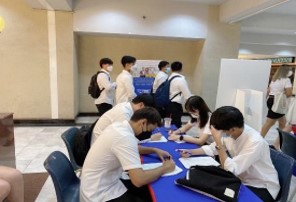
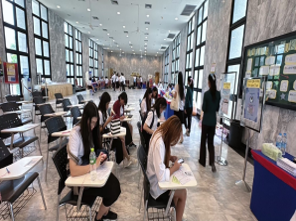
Every new student is screened for mental health during AU Freshmen Orientation Online and the AU Care project, then interviewed by Student Affairs staff. In Academic Year 2025, 385 international students were screened with the GHQ-12 test. The screening finds students who are struggling to adjust to a new country early, so the CCDC can follow up.
Peer support communities
- Assumption University International Student Community (AUISC): brings international students together and holds multicultural activities, supporting inclusion and equality among students from different cultures (SDG 10).
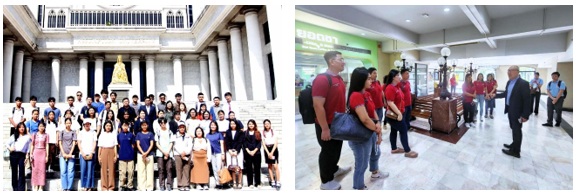
- AU Myanmar Student Community (AUMSC): explains academic information to Myanmar students, links senior students with first-year students as informal mentors, and creates opportunities for new Myanmar students (SDG 10).
References: Myanmar Students Discover the Spirit of AU: A Warm Welcome at Suvarnabhumi Campus; Myanmar’s Brightest Students Step into AU, Bridging Nations Through Education
Thai Fun Class for international students
On 16 September 2025, international students of the Graduate School of Business and Advanced Technology Management joined the Thai Fun International Class, a free 15-hour programme at the Hua Mak Campus. In small classes with digital learning materials, they practised everyday Thai such as greetings and ordering food and learned basic Thai consonants, manners and cultural traditions through games and songs. The class helps international students feel more confident and connected to Thai society (SDG 4, SDG 10).
Reference: Dive into Thai Culture with AU’s Free Thai Fun Class
2. Students and Staff with DisabilitiesMentoring
- Mentorship Program for students: faculty advisors and peer groups give academic support to all students, including students with disabilities.
- Individualized Support Plans: the Student Affairs Division prepares a plan for each student with special needs, covering learning accommodations, access to learning resources and help finding scholarships.
- Workplace Mentorship Program for staff: staff with disabilities have mentors who guide and support them at work.
Counselling
- Students with disabilities receive psychological and social counselling, plus career counselling and job placement support.
- Staff with disabilities receive health and mental health counselling and support.
Peer support and inclusion
- The University holds social activities that include students with disabilities, so they can build friendships with other students.
- For staff, the University adjusts recruitment for applicants with disabilities, adapts workstations and equipment, offers flexible working hours, and provides training and equal opportunities for career advancement.
3. Gender and Sexual DiversityConfidential counselling
Nurses at the University Health Center give students and staff confidential sexual and reproductive health counselling, covering safe sex, family planning, STI prevention and contraception. The Health Center is on both campuses (Suvarnabhumi: Queen of Sheba Building, 2nd floor; Hua Mak: M Building, 2nd floor).
AU Pride 2025 (26 June 2025)
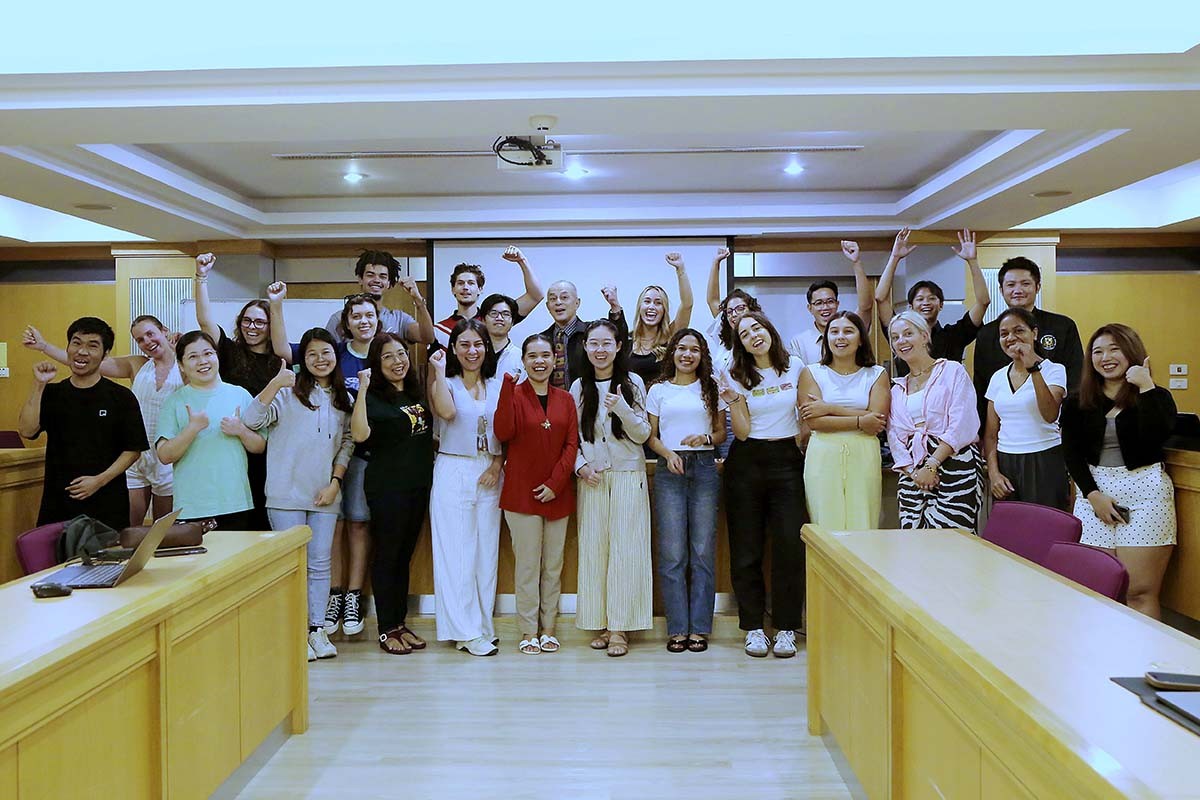
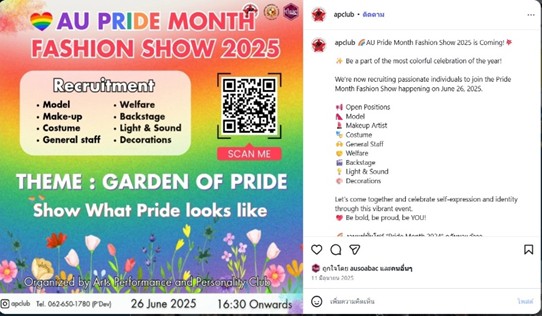
AU Pride 2025 is an annual student-led inclusion event organized by the AP Club (Arts Performance and Personality Club), with support from the Assumption University Student Organization (AUSO) and several faculties. Fashion runways, costume design competitions and arts performances give LGBTQ+ students and their peers a space to express their identities and tell their stories. The event promotes a “Pride Everyday” mindset and a safe, welcoming campus for all students, regardless of gender identity or background (SDG 5, SDG 10).
4. Support Staff in Lower-Paid Roles
Arts Speak Up Project Throughout Academic Year 2025 (June 2025–May 2026)
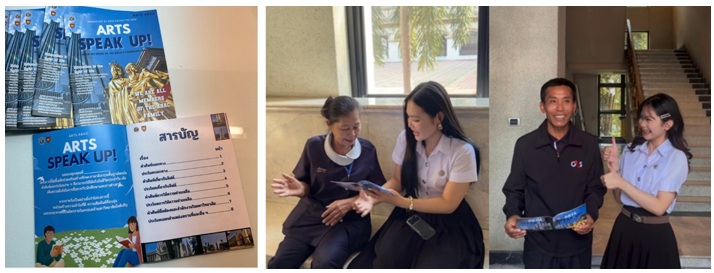
Housekeeping and security staff have few opportunities for learning and personal development at work. The Theodore Maria School of Arts Student Council ran the Arts Speak Up Project to give them practical English lessons, treating them as valued members of the academic community and not only as service providers. Student Council members and 27 student volunteers worked with advisors, lecturers, staff supervisors and the project sponsor. Because the staff work fixed shifts, volunteers brought the mentoring sessions to their workplaces at times that suited them.
Results: 37 staff took part against a target of 46 (80%, meeting the project KPI), and average satisfaction was 4.29 out of 5. Participants reported better English knowledge and skills and positive interaction with students. The team plans more workplace-based sessions and a wider range of lesson topics (SDG 4, SDG 8, SDG 10). [Date to be confirmed]
Janitor Appreciation Night 2026
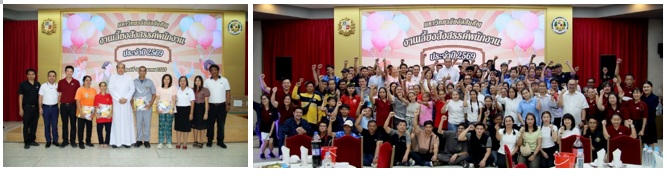
On 30 January 2026, the University held Janitor Appreciation Night 2026 to honour its janitorial staff, recognising them as valued members of the AU community whose daily work keeps the campuses running (SDG 8, SDG 10).
Reference: The Salt of the Earth: AU Celebrates Its People at Janitor Appreciation Night 2026
5. Vulnerable Groups in the Wider Community
The University also runs activities that support vulnerable groups outside the University:
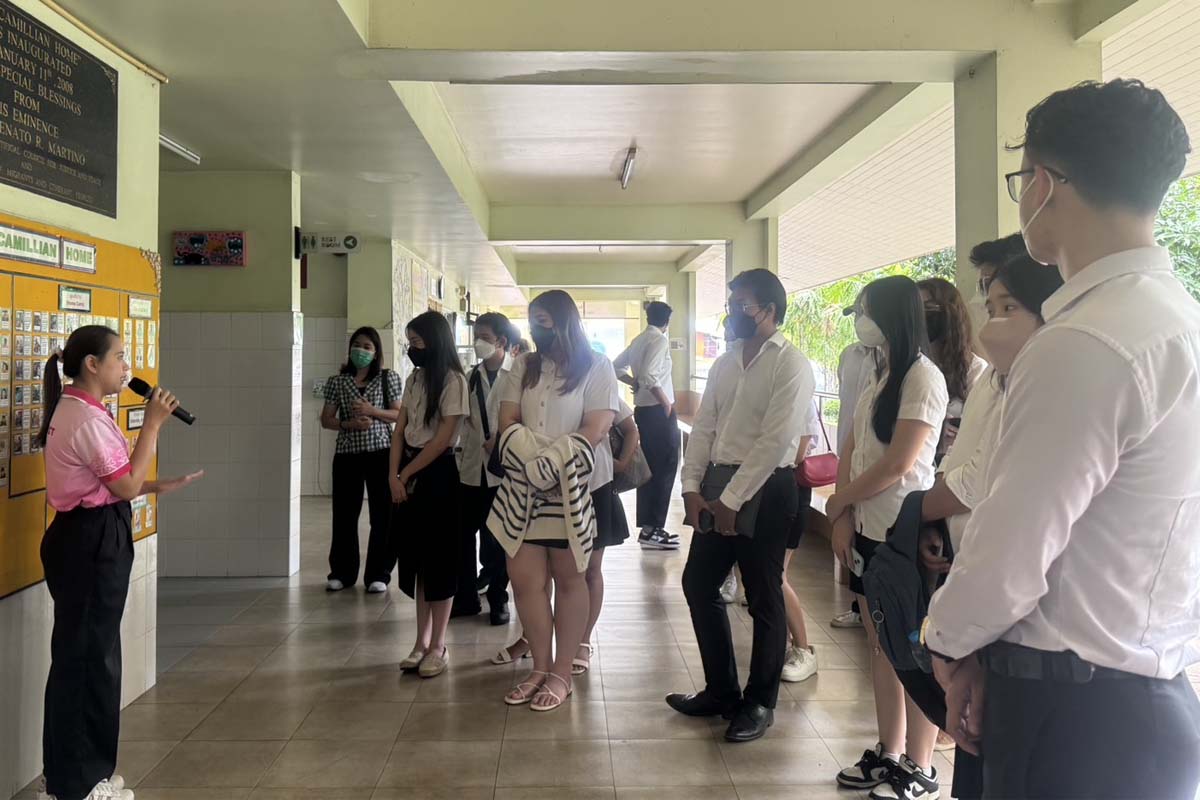
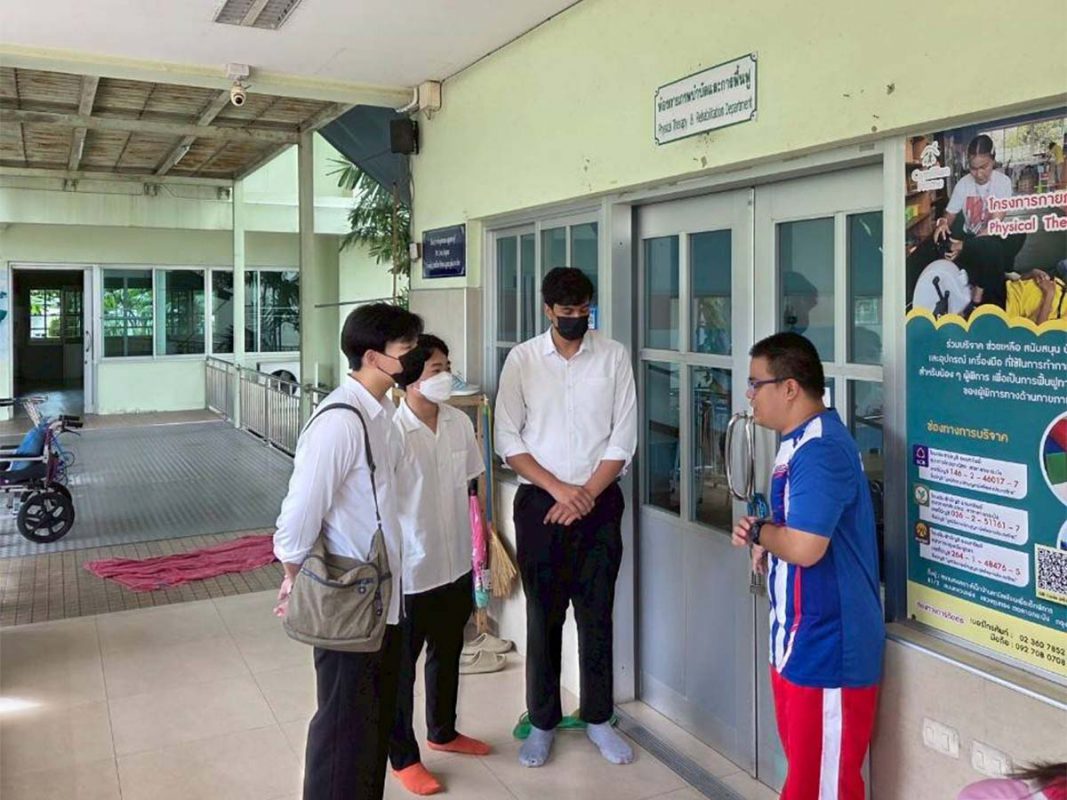
- Children with disabilities: On 20 June 2025, MSME students and faculty visited the Camillian Home for Children Living with Disabilities, run by the St. Camillus Foundation of Thailand, to launch the 2025 Youth Volunteer Project, supported by the Office of the Permanent Secretary, Ministry of Higher Education, Science, Research and Innovation. The project gave children with disabilities opportunities to express their ideas and abilities.
Reference: Empathy in Action: AU Students Begin Social Impact Project at Camillian Home
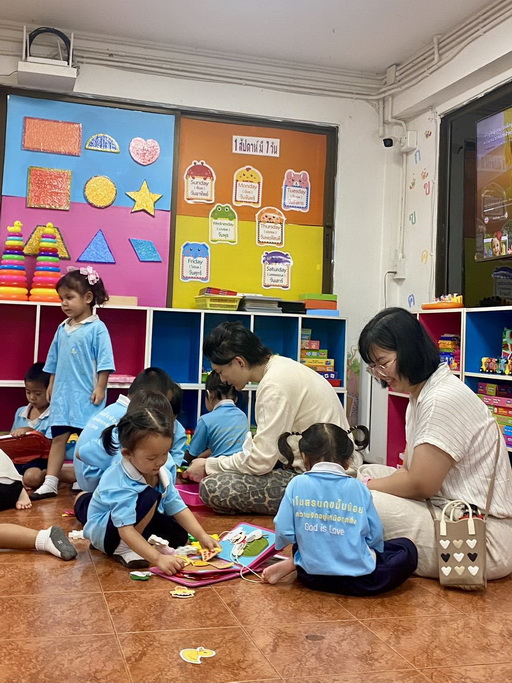
- Children from vulnerable backgrounds: On 25 February 2026, MA ELT students ran the “Sharing Knowledge, Spreading Love” project at the Baan Nok Kamin Foundation, providing English activities and free lunches for children, funded by money raised at the ELT booth at the IELE Language Café.
Reference: English Language Teaching Charity Project: “Sharing Knowledge, Spreading Love”

- Older people: The School of Music presented “Don’t Call It Old, Just Grown Up” with King Prajadhipok’s Institute and the Medical Council of Thailand. The event featured four original songs that challenge stereotypes about older people and promote understanding between generations.

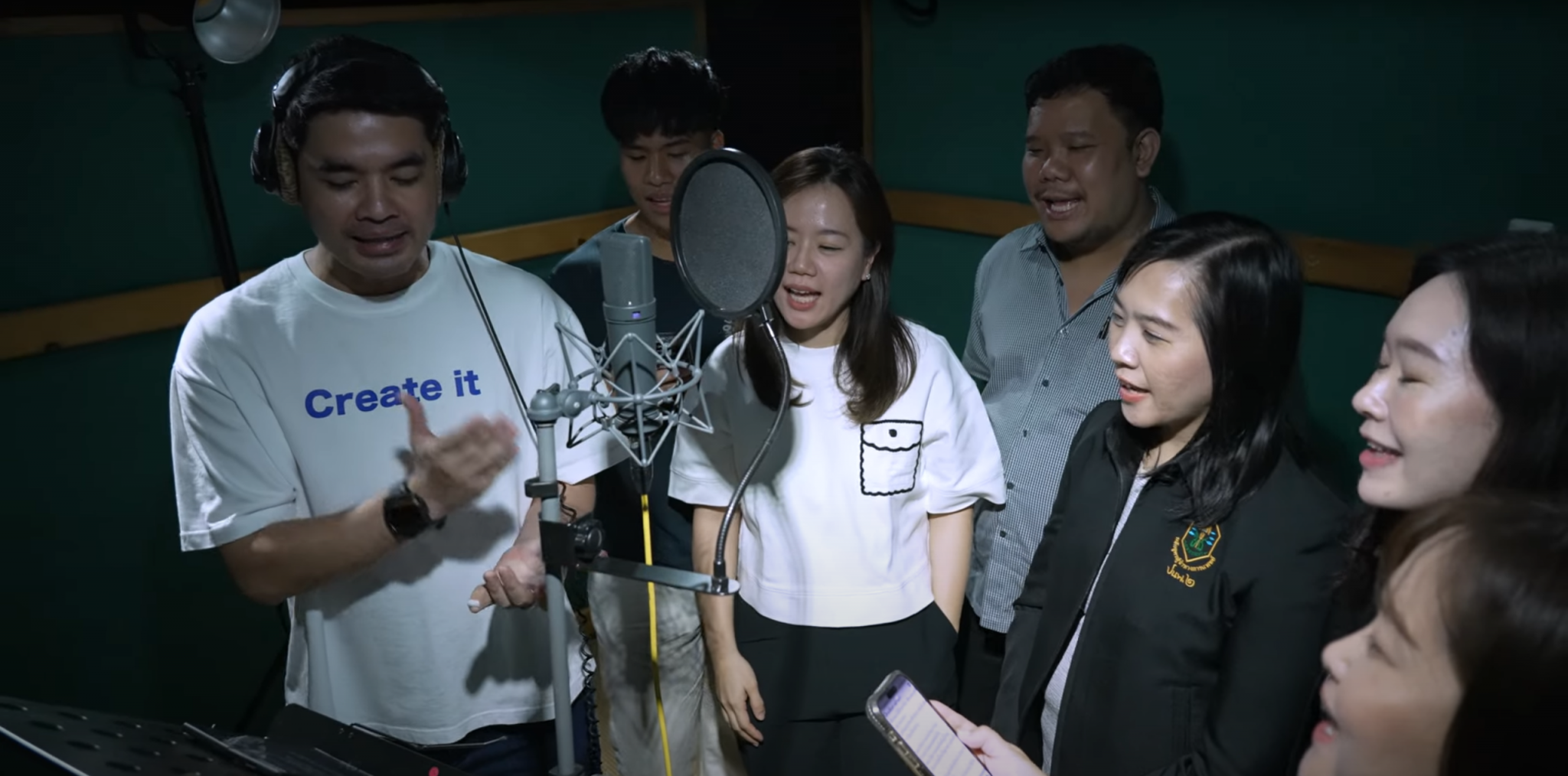
Reference: Thai Culture-Based Innovative Music Therapy for Aging Society
10.6.7 Accessible facilities
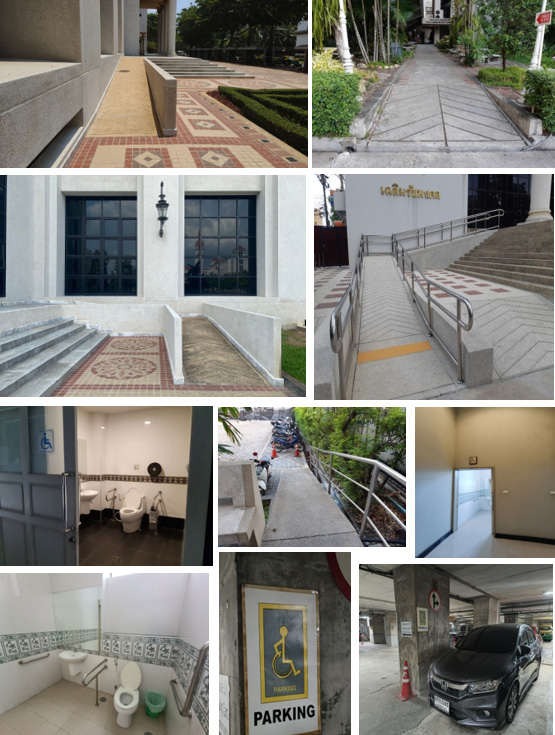
The Infrastructure and Facilities for Persons with Disabilities at Assumption University
Assumption University has designed and implemented a comprehensive infrastructure system to support persons with disabilities. This includes standardized ramps, specially designed restrooms, designated parking spaces, shuttle services, adaptive classrooms, accessible dormitories and specialized sports centers, emergency assistance systems, and a dedicated maintenance team..
10.6.8 Disability support services
Assumption University is committed to fostering an inclusive learning and working environment for students and staff with disabilities. In addition to physical accessibility, the university implements various initiatives to ensure equal opportunities in education, employment, and social participation as follows:
For Students with Disabilities
– Support is provided to students with special needs through the Student Affairs Division, which offers consultation, guidance, and coordination to ensure appropriate services and facilities.
– Individualized Support Plans are created based on each student’s specific needs.
– Academic support, learning accommodations, and access to learning resources are provided.
– Assistance is available in securing scholarships.
– Academic and social support includes:
- A Mentorship Program involving faculty advisors and peer groups to help all students, including those with disabilities, with their studies.
- Mental and social counseling services for all students, including those with disabilities.
- Social activities that welcome participation from students with disabilities to build peer relationships.
- Career counseling and job placement support tailored for students with disabilities.
For Staff with Disabilities
– Equal Employment Opportunities:
- The university maintains an inclusive hiring policy that ensures fair consideration for individuals with disabilities.
- The recruitment and selection processes are adjusted to accommodate applicants with disabilities.
– Workplace Accommodations:
• The work environment is adapted to meet the needs of staff with disabilities, such as modified desks or assistive equipment.
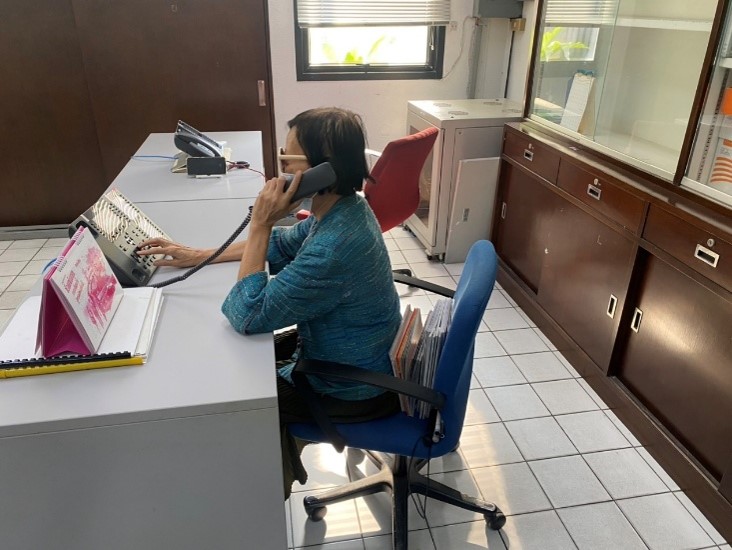

- A Mentorship Program within the organization provides guidance and support for staff with disabilities.
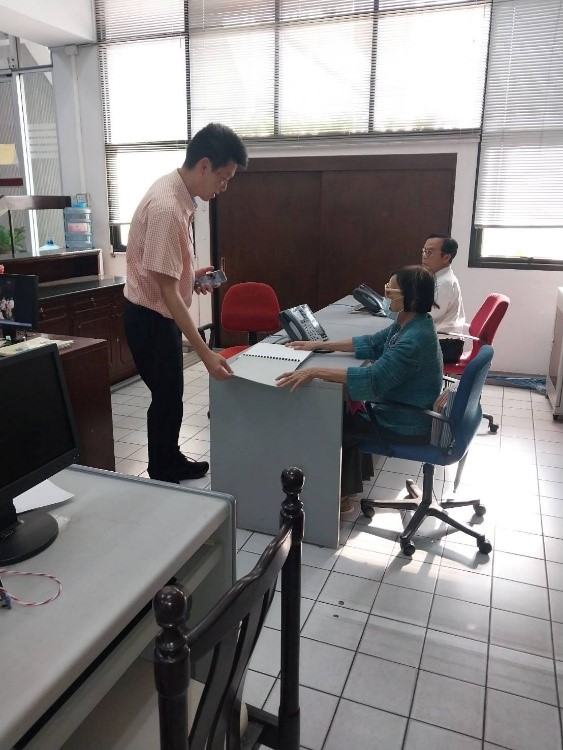
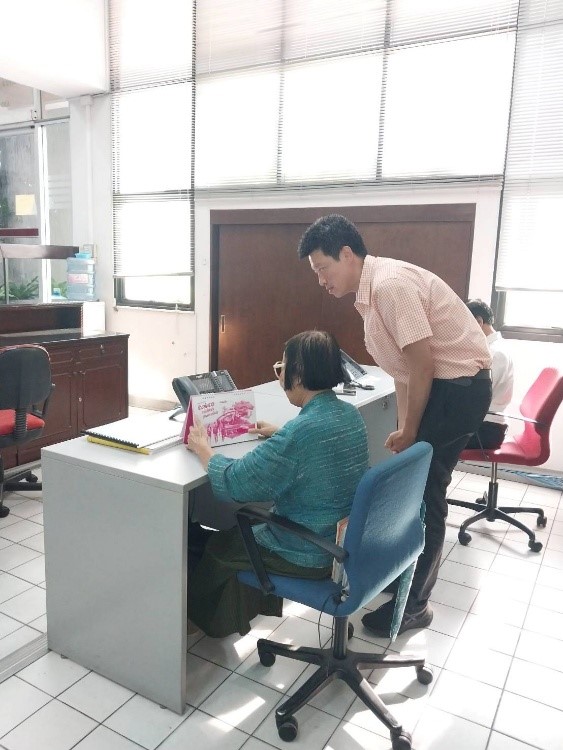
- Flexible work arrangements are available, including adjusted working hours where appropriate.
– Capacity Building:
- The university encourages staff development through training and skill-building programs.
- Equal opportunities for career advancement are provided.
– Welfare Support:
- Comprehensive and appropriate welfare benefits are offered to meet the specific needs of staff with disabilities.
- Health and mental health counseling and support services are available.
Assumption University is dedicated to creating an open and friendly environment where individuals with disabilities can participate fully and reach their highest potential.
10.6.9 Disability access scheme
Assumption University’s access schemes for persons with disabilities include Individualized Support Plans and a Mentorship Program for students, a Workplace Mentorship Program for staff, adjusted recruitment and selection processes, adapted workstations and assistive equipment, flexible working hours, and help in securing scholarships. The Student Affairs Division coordinates these schemes for students and the Office of Human Resources Management for staff (see 10.6.6, 10.6.8 and 10.6.10).
10.6.10 Disability accommodation policy
Assumption University’s Employment Policy for Persons with Disabilities
The University complies with the Persons with Disabilities Empowerment Act B.E. 2550 (2007) and its subsequent amendments. Under this law, employers with 100 or more employees are required to either:
- employ persons with disabilities who are capable of working (Section 33),
- support occupations for persons with disabilities by providing subcontracting or concession opportunities (Section 35),
- or contribute to the Fund for Empowerment of Persons with Disabilities in lieu of employment (Section 34).
The University is also required to report its compliance to the Department of Empowerment of Persons with Disabilities by March 31 of every year.
In the year 2025, Assumption University complied with the law by employing 5 persons with disabilities under Section 33 and contributing to the Fund under Section 34 in lieu of employing 4 additional persons with disabilities.
Support Office for Persons with Disabilities at Assumption University
Assumption University places great importance on creating a compassionate and inclusive environment for everyone. The university has established mechanisms to support persons with disabilities through two main departments: the Office of Human Resources Management, which oversees staff with disabilities, and the Student Affairs Division, which supports students with disabilities.
- Office of Human Resources Management
This office provides support for staff members with disabilities.
Team Structure:
- 1 Director of the Office of Human Resources Management
- 1 Advisor to the Director
- 1 Assistant Director
- 15 Staff Members
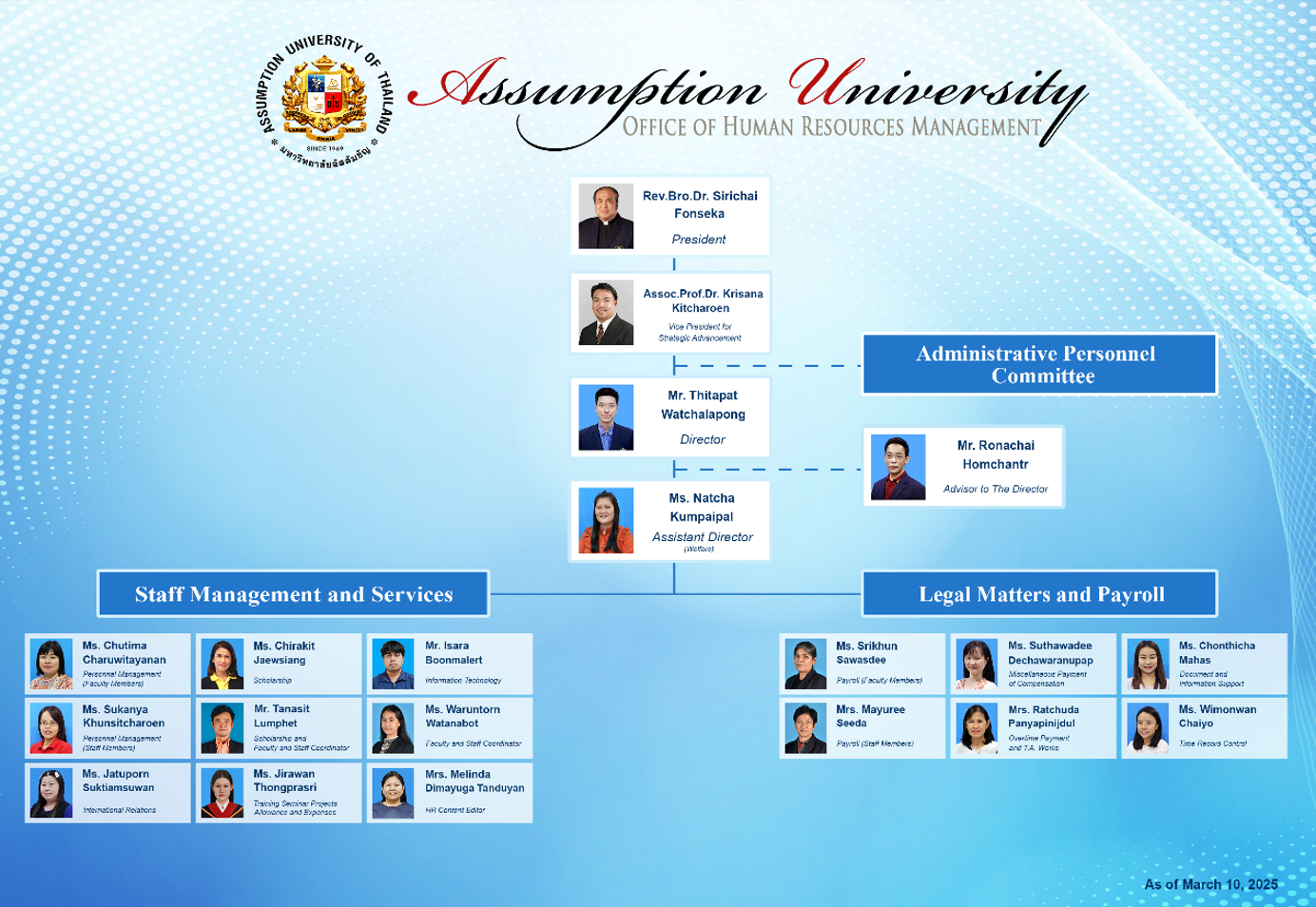
Services for Staff with Disabilities:
- Personnel Section: Prepares employment contracts for persons with disabilities and supports their integration into the workforce alongside other staff.
- Welfare and Benefits Section: Coordinates and disburses welfare and benefits so that persons with disabilities receive equal rights and entitlements.
- Training and Development Section: Coordinates access to training and self-development opportunities for persons with disabilities, ensuring equal opportunities with other staff.
- Rules and Regulations Section: Oversees and ensures that staff members treat persons with disabilities appropriately and respectfully.
- Payroll Section: Responsible for disbursing salaries and compensation to staff with disabilities.
Contact Information:
- Building D, 1st Floor
- Phone: 02-783-2222
- Website: www.ohrm.au.edu
- Email: hrm@au.edu
- Student Affairs Division
This division provides comprehensive support services to all types of students with disabilities.
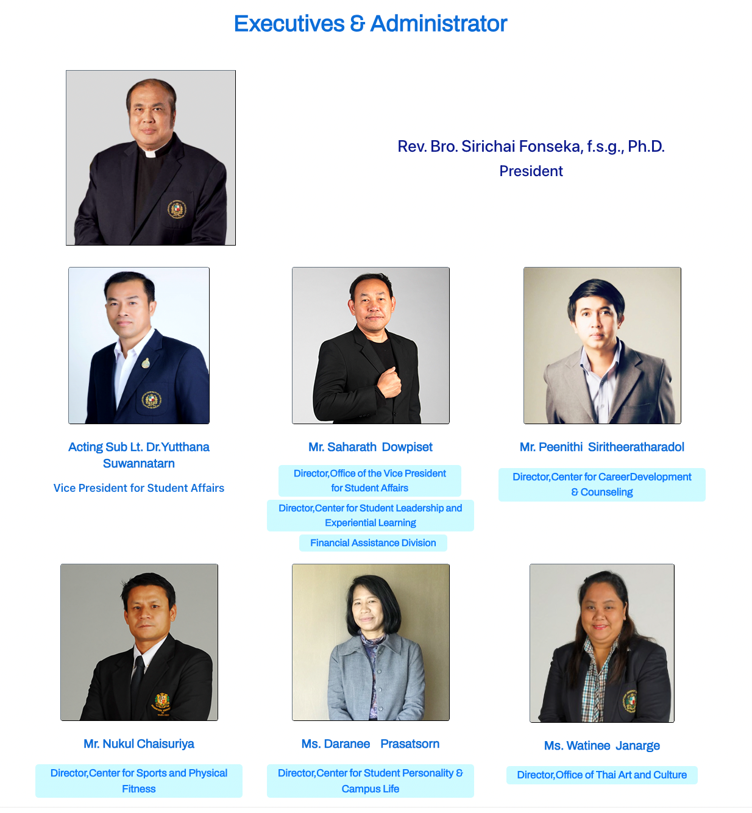
Team Structure:
- Office of the Vice President for Student Affairs
Facilitates and supports operations, management, and personnel development within the Student Affairs Division.
- Center for Career Development and Counseling
Offers counseling and services related to mental health, learning, and career guidance, along with career development programs.
- Center for Student Leadership and Experiential Learning
Provides advice and information on specific activities that help students gain learning experiences outside the classroom.
- Center for Sports and Physical Fitness
Encourages access to sports and fitness facilities for both staff and students to promote physical development.
- Center for Student Personality and Campus Life
Responsible for student rights and discipline, dormitory life, student safety, and welfare.
- Office of Thai Art and Culture
Promotes Thai art and culture through academic instruction and student activities.
- Financial Assistance Division
Assists students in accessing financial aid and funding sources.
Services for Students with Disabilities:
- Provides counseling, advice, and coordination in securing appropriate services and facilities.
- Offers academic support.
- Assists in obtaining scholarships and access to funding sources.
- Organizes activities that encourage participation and potential development of students with disabilities.
Contact Information:
- CL Building, 14th Floor, Student Affairs Division
- Phone: 0-2783-2222 ext. 2145
- Website: www.sa.au.edu
10.6.11 Anti-harassment policy
Anti-Sexual Harassment Provisions, Assumption University
Based on the Assumption University Regulation on the Code of Ethics for the Chairperson of the University Council, University Council Members, Executives, Personnel, and Students of Assumption University, B.E. 2564 (2021)
Assumption University respects the human dignity and bodily autonomy of every person. The University therefore does not tolerate sexual harassment or sexual misconduct in any form. It is committed to a safe and mutually respectful working and learning environment for students, personnel, and everyone connected with the University.
1. Prohibitions for Academic Personnel
- Academic personnel must not engage in physical or verbal conduct, or display behavior, that constitutes or suggests sexual harassment toward students or any person who is not their spouse (Clause 41).
- Academic personnel must not sexually harass, or have sexual relations with, students or any person who is not their spouse (Clause 42).
- Academic personnel must be good role models for students in action, speech, and thought (Clause 36).
2. Prohibitions for Academic Support Personnel
- Academic support personnel must not engage in physical or verbal conduct, or display behavior, that constitutes or suggests sexual harassment toward any person who is not their spouse (Clause 54).
- Academic support personnel must not wrongfully use or disclose information about students or other individuals obtained in the course of their duties (Clause 53).
3. Student Responsibilities
Students must respect the rights of others, live harmoniously with others, and cause no trouble or disturbance to anyone (Clause 57). Students must also refrain from misconduct that damages the University’s reputation (Clause 61).
4. Oversight and Enforcement
- Responsible body: The Good Governance and Ethics Committee, appointed by the University Council, proposes ethical guidelines and measures and considers and rules on ethical violations (Clauses 63, 65).
- Disciplinary offenses: These are handled under the law or the University’s regulation on personnel administration (Clause 66).
- Non-disciplinary violations: These are handled by a warning, an order to make corrections within a set period, or a written probation. The Human Resources Management Office is then notified so the action is recorded in the person’s file (Clause 66).
References: Assumption University Regulation on the Code of Ethics, B.E. 2564 (2021)
Loading Viewer...